
Boiler Controller

Neptune VTF-2HP Bypass Feeder – Flat Bottom (2 Gallon)
Original price was: $380.00.$340.90Current price is: $340.90.
SKU:
VTF-2HP
Neptune VTF-5HP (5 Gallon) Flat Bottom Bypass Feeder
Original price was: $496.00.$410.00Current price is: $410.00.
SKU:
VTF-5HP


Neptune FTF-5HP (7.5 Gallon) Flat Bottom Filter Feeder
Original price was: $921.00.$848.50Current price is: $848.50.
SKU:
FTF-5HP

Neptune FBK-2 Filter Bag Kit
Original price was: $225.00.$195.00Current price is: $195.00.
SKU:
FBK-2
Advantage Controls BF-BGCAGE18-F – Bypass Feeder SS Bag Filter Cage, 18” (No Handle)
Original price was: $116.00.$100.90Current price is: $100.90.
SKU:
BF-BGCAGE18-F

J.L. Wingert DB-5HD (5 Gallon) Dome Bottom Bypass Feeder with Legs
Original price was: $1,196.66.$732.00Current price is: $732.00.
SKU:
DB-5HD

Neptune 107290 (5-Micron) Filter Cartridge – Replacement for DBFC Series Bypass Feeders – 5 Pack
Original price was: $185.00.$160.00Current price is: $160.00.
SKU:
107290


Neptune FBK-10 Filter Bag Kit
Original price was: $275.00.$239.00Current price is: $239.00.
SKU:
FBK-10

Neptune DBF-10HP Bypass (Pot) Feeder Dome Bottom (10 Gallon)
Original price was: $775.00.$660.00Current price is: $660.00.
SKU:
DBF-10HP
Maximizing Boiler Efficiency: A Complete Guide to Automated Water Treatment Systems
A Boiler system is the heart and core of your water treatment system. It’s the powerful workhorse driving your operations day in and day out. But it’s also a huge energy consumer and, if its health is ignored, a massive potential liability. If you are still stuck with outdated manual testing and guesswork to protect this mission-oriented system, you’re at risk.
The silent threats of scale, corrosion, and energy waste can lead to staggering costs from emergency repairs and unplanned shutdowns. The smart move is to shift from reactive fixes to proactive protection. That means embracing an automated boiler water treatment system: a setup that works around the clock to safeguard your investment.
Here at Water Treatment Supply, we’ll let you know the must-have parts of an effective boiler water treatment system. From the central controller to the equipment that doses chemicals and pulls samples, you’ll see how to build a system that boosts both efficiency and its operational lifespan.
The High Cost of Inaction: Why Boiler Water Treatment Matters?
Before we get into the hardware, it’s important to understand why proactive treatment is non-negotiable. Putting your boiler’s water chemistry on the back burner is a direct hit to your budget.
- Scale Buildup: The minerals in your water, like calcium and magnesium, can build up inside your boiler, forming a layer of rock-hard scale on its metal surfaces. This scale acts like an insulator, forcing your boiler to work harder and burn more fuel just to do its job. Your energy bills will climb as a result.
- Corrosion: When pH levels are off or there’s too much dissolved oxygen in the water, a slow-motion disease starts: corrosion. It eats away at the metal of your boiler and pipes from the inside out, leading to leaks, equipment failure, and safety hazards that can bring your entire operation to a standstill.
- Steam Carryover: Poor water quality can lead to foaming, which allows water droplets to escape with the steam. This “dirty steam” can wreck sensitive downstream equipment like turbines, heat exchangers, and control valves.
These aren’t just technical problems; they are business problems that show up as higher bills, frustrating downtime, and the potential for massive replacement costs.
The Boiler Controller: Your System’s Automated Brain
So, how do you fight back against these constant threats? The answer is automation, with the boiler controller acting as the system’s brain. This smart device is the central hub, using sensors to keep an eye on water quality and make intelligent decisions in real time, without you having to lift a finger.
A modern boiler controller handles two primary jobs flawlessly:
- It handles automated blowdowns. By constantly reading the water’s conductivity (a measure of dissolved solids), it initiates a blowdown only when solids reach a set limit. This precise approach saves an incredible amount of water, heat energy, and treatment chemicals compared to old-school manual or timer-based blowdowns.
- It controls the chemical pumps. Based on real-world inputs, the controller tells your chemical pumps exactly when to activate, maintaining the perfect cocktail of inhibitors needed to stop scale and corrosion dead in their tracks.
This gives you a level of consistency and reliability you can’t achieve manually, all while freeing up your team to focus on other important work.
Getting Chemicals in the System: The Role of a Chemical Feeder for Water Treatment
A smart controller is fantastic, but it’s only as good as the dosing system it’s telling what to do. Getting the chemical delivery right is what makes the whole program work. This comes down to two things: knowing when to dose and having a reliable way to get the chemicals in.
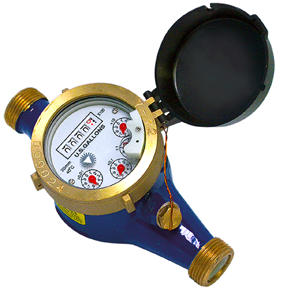
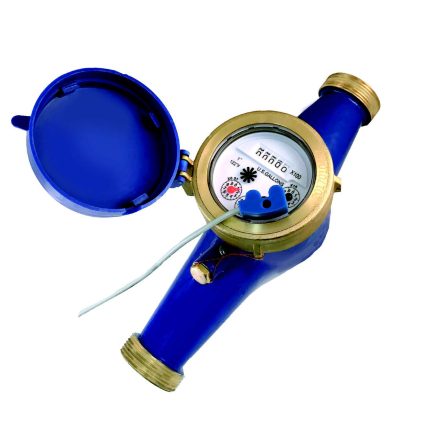
The smartest and most efficient way to manage chemical additions is to tie them directly to your water usage. This is the job of a water meter for chemical dosing.
It’s a simple concept: you only need to add treatment chemicals when you add new, untreated water to the system. A special contacting-head water meter is installed on the makeup water line. For every gallon of fresh water that flows past it, the meter sends a quick pulse to the chemical pump. This “proportional feed” strategy is your guarantee that you’re not wasting expensive chemicals or, even worse, under-treating the system. It’s the most accurate and budget-friendly way to run your chemical program.
Knowing when to dose is half the battle. The other half is getting those chemicals into a pressurized system safely and easily. This is where a water treatment bypass feeder, often called a pot feeder, becomes a key piece of the puzzle.
This is a small, heavy-duty pot that’s installed on a “bypass loop” next to the main pipe. It lets an operator introduce a “shot” of liquid or solid chemicals without having to shut anything down. The process is straightforward: you use valves to isolate the feeder, depressurize it, add your chemicals, seal it back up, and then slowly open the valves again. The system’s water flow then carries the treatment out of the feeder and into circulation.
When choosing a chemical feeder for water treatment, you want something built to last. That’s why we at Water Treatment Supply stand by proven, heavy-duty options. A Neptune chemical bypass feeder is a classic example of a feeder built for durability and long-term service. In the same way, a J.L. Wingert bypass feeder tank is another industry workhorse, offering a range of sizes and configurations that we regularly recommend to fit specific system demands.
Verifying Performance with a Boiler Water Sample Cooler
Automation is a game-changer, but you can’t just “set it and forget it.” You still need to verify that everything is working as planned by testing the water. But how? Trying to grab a sample directly from a boiler is not just a bad idea; it’s incredibly dangerous. The superheated, high-pressure water will flash instantly to steam, which can cause severe burns and give you a concentrated, completely inaccurate sample.
The professional solution is a simple but critical piece of safety gear: the boiler water sample cooler.
A boiler water sample cooler is a mini heat exchanger with one job: to safely cool down a small stream of boiler water. It works by passing the hot sample through a small coil of tubing that is submerged in a flow of cold tap water. This is essential for two reasons:
- Safety First: It brings the sample down to a safe-to-handle temperature, eliminating the risk of burns.
- Guaranteed Accuracy: By cooling the sample while it’s still under pressure, it prevents flashing. This means the water you collect is a true representation of what’s actually inside your boiler, so your tests are accurate.
Build Your Complete System with Water Treatment Supply
A top-tier boiler treatment program isn’t about one gadget. It’s about how all the pieces work together. When you bring together a smart controller, a precise water meter for chemical dosing, a durable water treatment bypass feeder, and a safety-critical boiler water sample cooler, you create a truly protected system.
At Water Treatment Supply, we understand that every facility’s needs are different. We’re not just box-shifters; we’re problem-solvers. We partner with you to help you select the right components that fit together to protect your critical assets.
Get ready to leave guesswork behind and build an automated system that saves money and gives you peace of mind.
Explore our comprehensive Boiler Controller Application page to see these components in action, or contact the WTS experts today to design a solution tailored for your facility.
FAQs
- Can I upgrade my existing boiler with an automated treatment system?
Absolutely. These devices are meant to be added to existing boilers. You don’t need a new system to enjoy the advantages of automation; you can upgrade the system you have now to immediately increase its efficiency and protection.
- What is the typical payback period for an automated boiler water treatment system?
Most facilities experience ROI within 1-2 years. Savings are derived from lower fuel and water bills, less use of chemicals, and, more importantly, avoiding expensive emergency repairs and lost production time.
- Is an automated system really necessary if the team does daily manual tests?
Manual tests exist in time. An automated system is constantly monitoring your boiler, making changes as soon as they are needed, and identifying upset conditions the instant they begin. This is a level of continuous, proactive protection that a scheduled manual test cannot achieve.
- If the system is automated, what is the role of my operator?
Automation empowers your operators; it doesn’t replace them. By handling the repetitive monitoring and dosing, the system frees up your team to focus on higher-value work like managing chemical inventory, analyzing performance data, and performing preventative maintenance.